Why this article exists
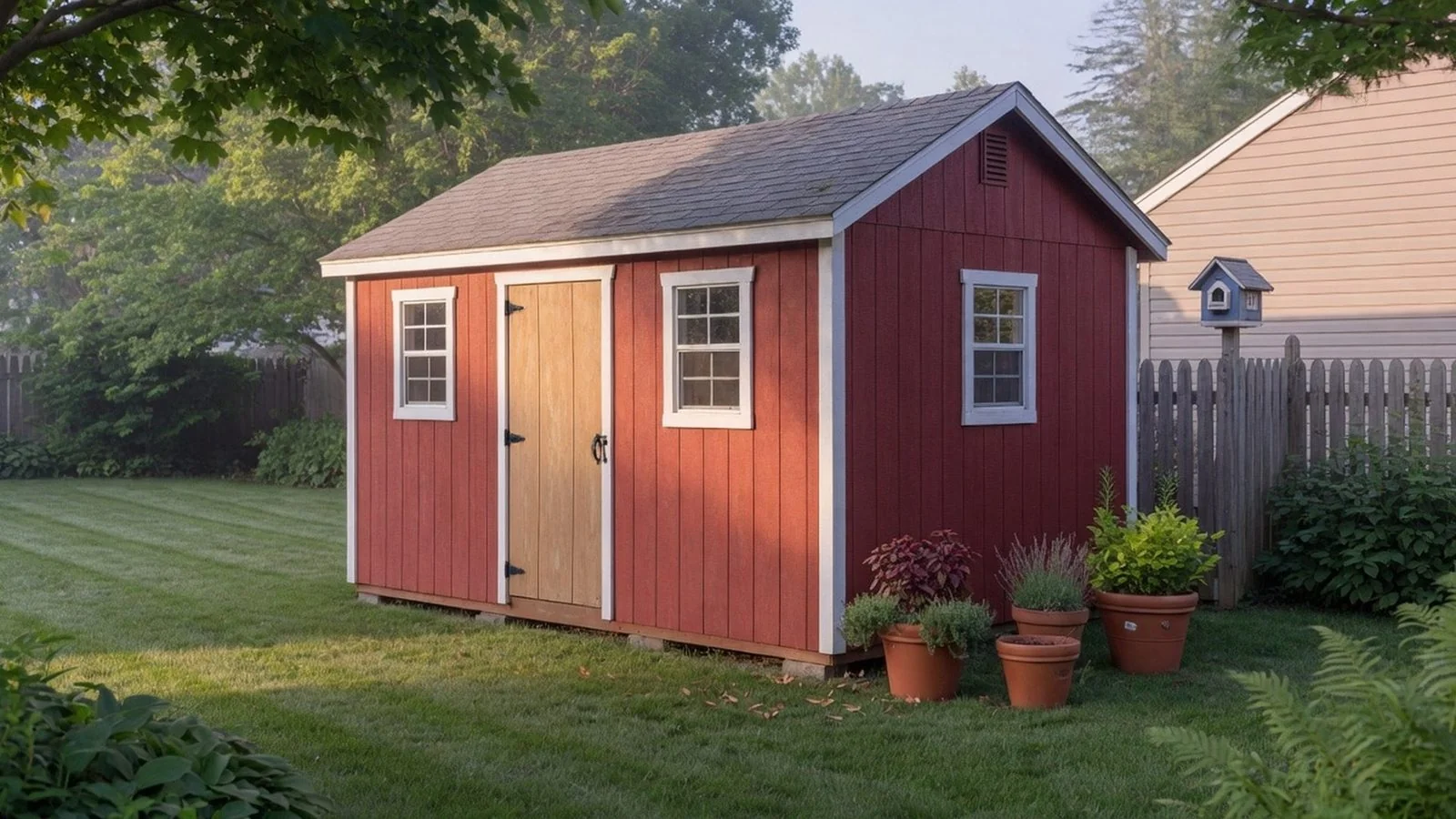
If you walk into a Home Depot, a Lowe's, or pretty much any local shed lot in the United States, the shed staring back at you is almost certainly a 2x4-framed, T1-11-sided wood shed. About 2.9 million sheds are bought or built in the US every year, and this single category dominates everything under the $10,000 line. It's the default. It's what your neighbor has. It's what you probably picture when you close your eyes and think "shed."
It's also surrounded by more quiet disappointment than any other category we cover.
The pattern is consistent enough that we can almost script it: the first three months feel great, year one starts to show small cracks (literally and figuratively), year five brings the first real maintenance bill, and somewhere between year eight and year twelve a real conversation about whether the shed has cost more than it added begins. None of this is fatal. Plenty of T1-11 sheds give twenty good years to people who knew what they were signing up for. But "knew what they were signing up for" is doing enormous work in that sentence, and almost nobody is told the full story up front.
This article is the full story. By the end of it you'll know exactly what a 2x4-framed T1-11 shed is, where it shines, where it quietly bleeds your weekends and your wallet, and how to tell — before you spend the money — whether you're the buyer who'll be glad in fifteen years or the buyer who'll be quietly listing it on Facebook Marketplace in seven.
What "wood frame T1-11 shed" actually means
The category has a confusingly technical name for something so common, so let's break it down before we go any further.
2x4 framing means the structural skeleton — the studs in the walls, the joists in the floor, often the rafters in the roof — is built from standard 2x4 dimensional lumber, the same stuff that frames the inside of your house. Walls are typically built at either 16 inches on-center (more studs, more rigid, the way a quality builder does it) or 24 inches on-center (33% less lumber, what a budget production line uses to hit a price point). Both are legitimate; they tell you very different things about what you're buying.
T1-11 siding is the grooved-plywood-looking exterior. The name is short for "Textured 1 Side, 11th in the product series," which has nothing to do with anything you'll ever care about. What matters is the substrate. T1-11 comes in two flavors: real plywood, made of laminated wood veneers in alternating grain, and OSB (oriented strand board), made of pressed wood chips bonded with resin. Plywood T1-11 is dimensionally stable, holds fasteners properly, and can give you decades of service if it's painted on schedule. OSB T1-11 is significantly cheaper, far less moisture-tolerant, and is the substrate behind almost every "my shed siding rotted in five years" story you'll find online. They look identical on the shelf. They are not the same product.
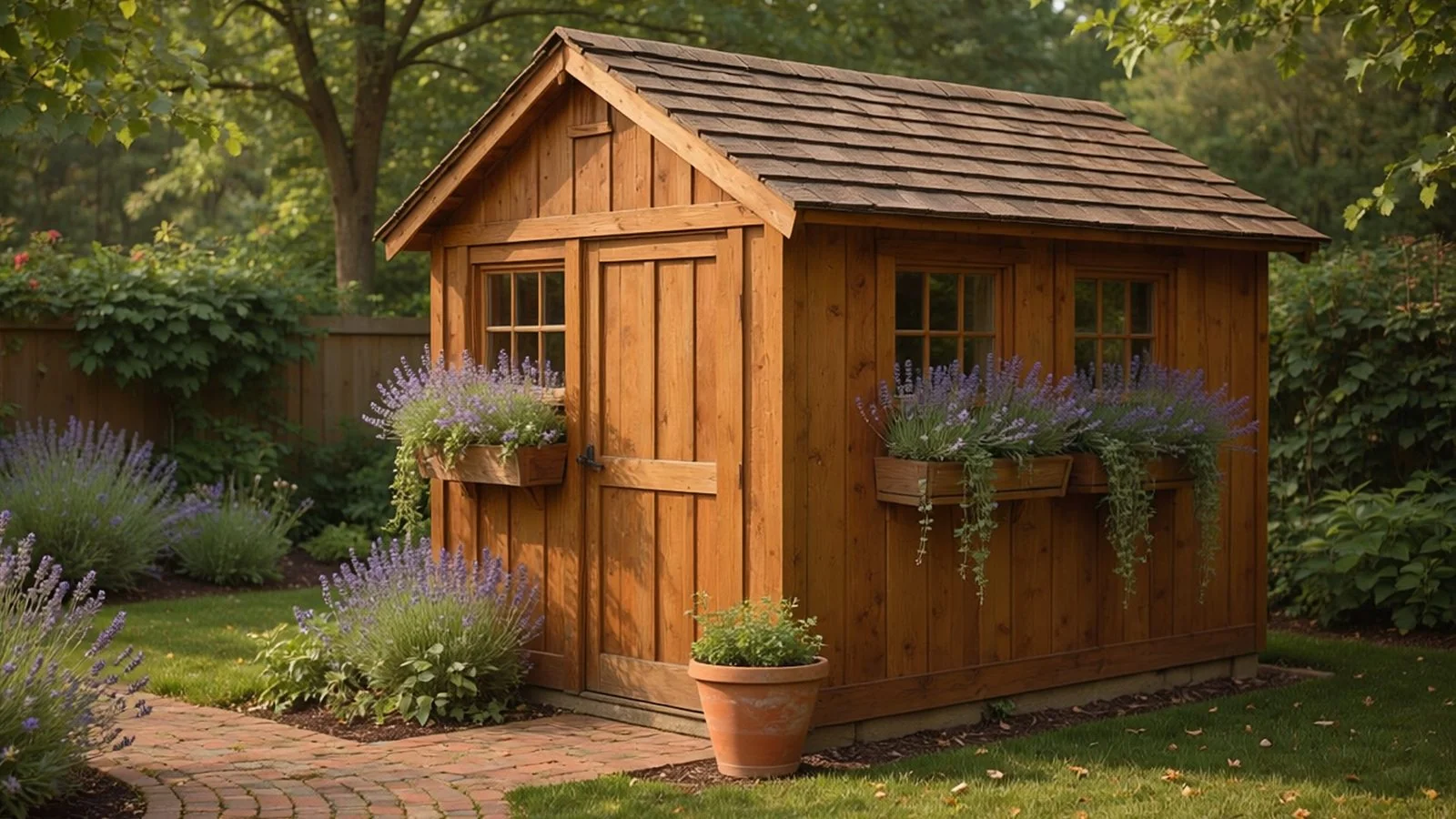
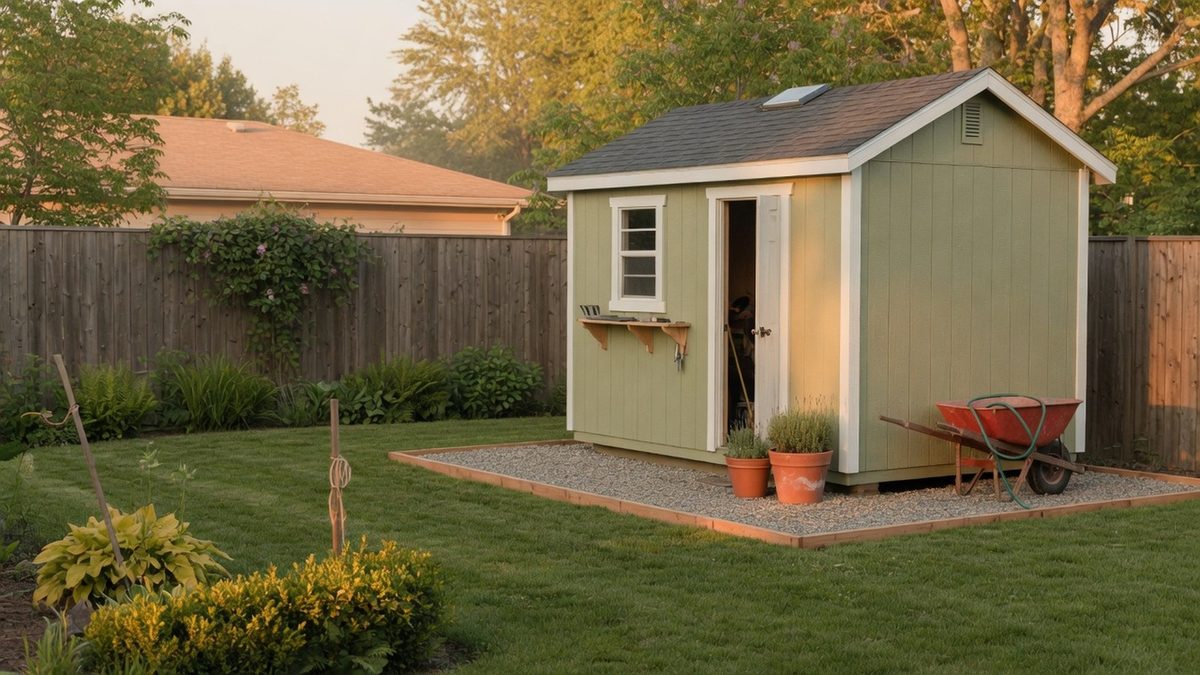
So a "2x4-framed T1-11 shed" is, structurally, a small wood-stick-framed building wearing a grooved-plywood skin. Underneath the marketing language, it's the simplest, most familiar form of construction in American home building, scaled down to backyard size. That familiarity is part of why it dominates the market — and also part of why people underestimate how much real-house-style maintenance it actually demands.
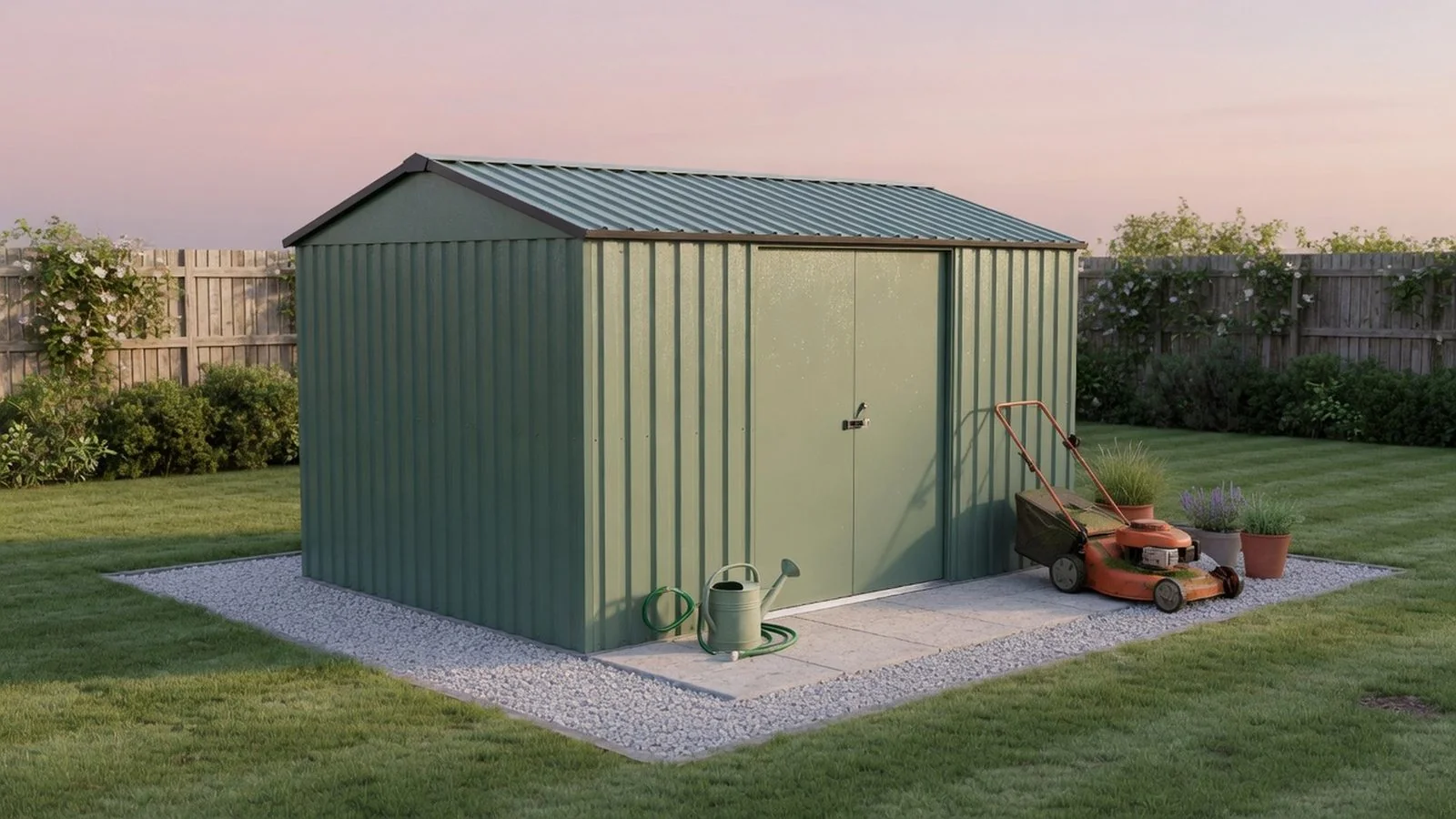
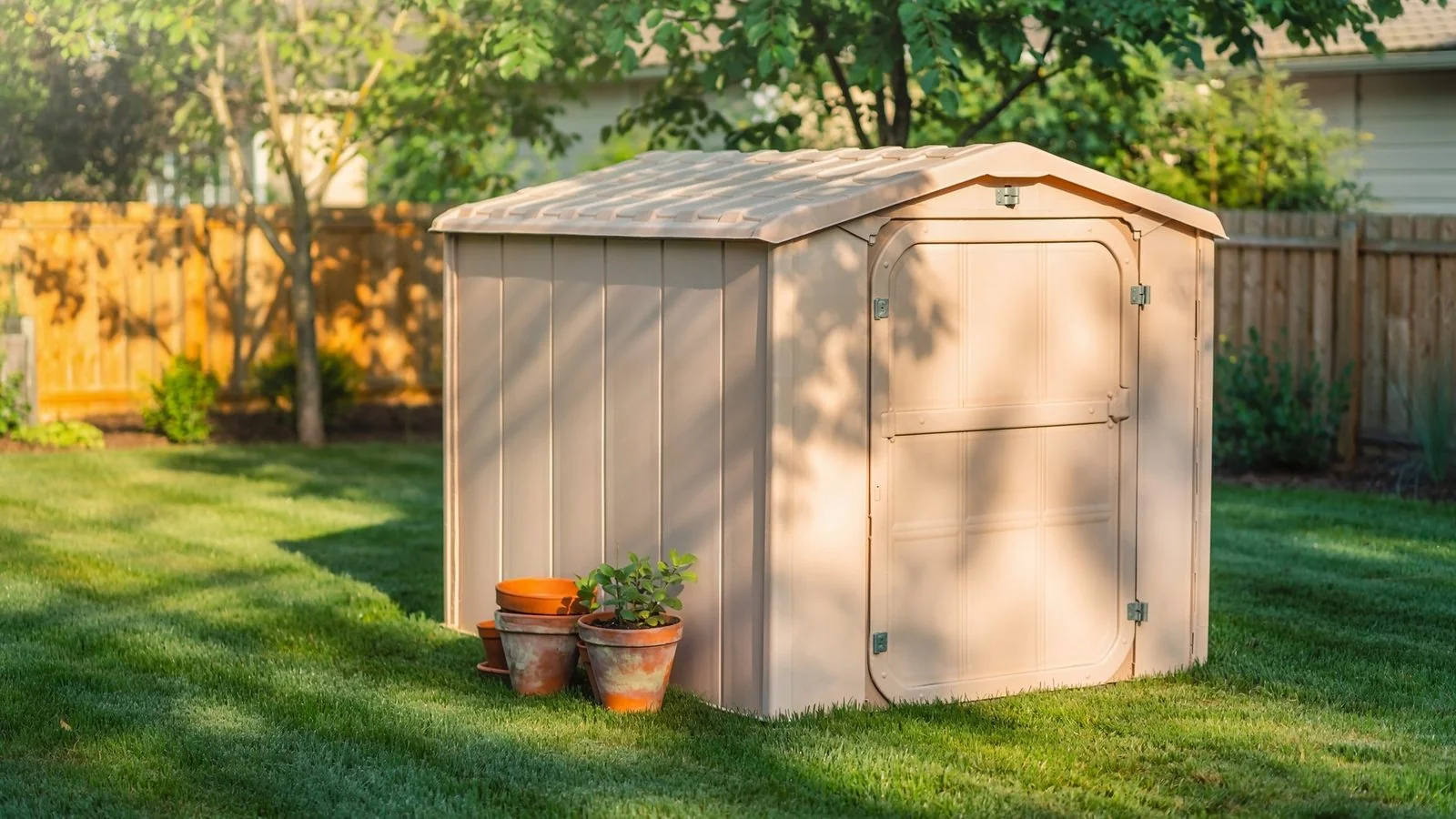
The category divides cleanly into five quality tiers, and where you land on this ladder will determine almost everything about how the next fifteen years go. At the bottom, $300 to $1,500 buys you an entry-level metal or resin shed that isn't really in this category at all (we cover those separately). One step up, $1,500 to $4,000 buys you a budget wood-frame kit using OSB T1-11 with 24-inch on-center framing — the cheapest legitimate wood shed you can build. The middle tier, $3,500 to $8,000, is where most of the market lives: standard installed wood sheds from Tuff Shed, Heartland, and the Amish builders, using plywood T1-11 with 16-inch framing, with a realistic 15- to 25-year life. Above that, $8,000 to $20,000 buys you a premium manufactured shed with LP SmartSide siding (more on this later) and a realistic 25- to 40-year life. At the top, $15,000 and well beyond, you're in custom timber-frame and cedar territory — different categories we cover in their own guides.
The honest version of "what wood frame T1-11 means" is this: it's the default American shed, it spans an enormous quality spectrum from disposable to genuinely durable, and the difference between the bottom and the middle of the spectrum is the difference between a 5-year regret and a 20-year asset. Choosing well inside the category matters more than choosing the category itself.
Is a 2x4 + T1-11 shed actually right for you?
Before we go any further into siding chemistry, foundation choices, and warranty fine print, here's the gut check. Wood frame T1-11 is the right answer for a pretty specific kind of buyer, and being clear about whether that's you will save you several thousand dollars and a lot of weekends.
You're probably in the right place if you can say yes to most of this. You want a real building you can hang shelves in, run an extension cord into, and treat like a small workshop or garden room. You're comfortable with the idea that a shed is a wood structure that needs to be painted on a schedule, just like your house. You either enjoy weekend maintenance work or you're willing to budget for someone else to do it every five to ten years. Your budget lives somewhere between $3,500 and $8,000 for an installed shed, or $1,500 and $4,000 for a DIY kit. You want something that will look good for at least fifteen years and that you can fix when something goes wrong, instead of throwing it away. If that's you, this is genuinely the category for you.
You're probably in the wrong place if any of this sounds familiar. You want a shed you "never have to think about" — no painting, no caulking, no checking the south wall every spring. (You want plastic, metal, or LP SmartSide.) You live somewhere extremely humid, somewhere coastal, or somewhere with brutal freeze-thaw cycles, and you don't want to repaint every five years or watch the bottom edges rot. (You want LP SmartSide, fiber cement, or cedar.) You want the cheapest possible structure and you don't actually care if it lasts ten years. (You want metal or resin.) Or you want a building that adds real resale value to your home and that an appraiser would call "real estate." (You want a custom timber-frame or solid-wood structure on a permanent foundation, and we have separate guides for those.)
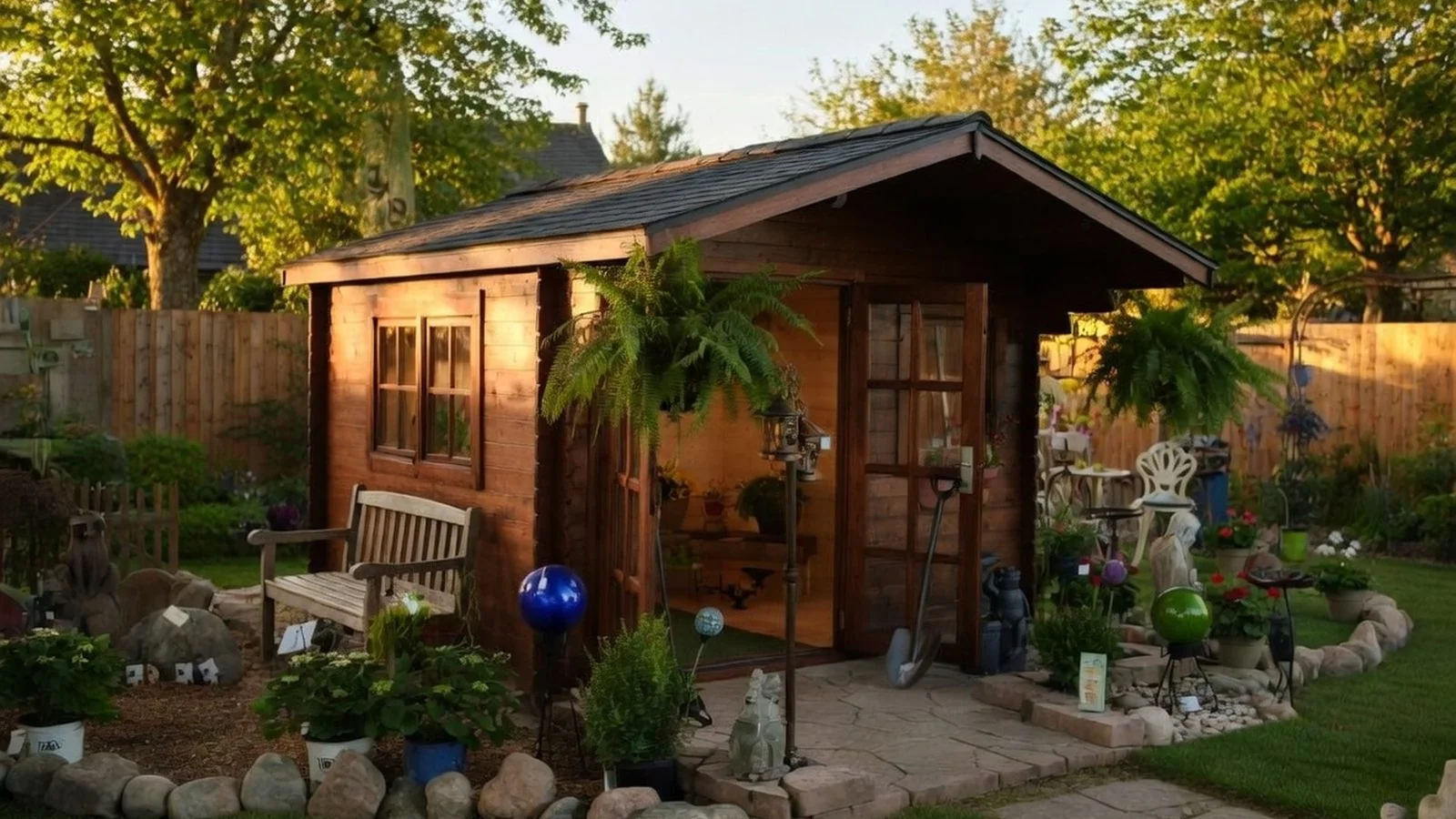
A few specific cases where T1-11 wood frame almost always wins, even if some of the warnings in this article unsettle you. You're a hobbyist, woodworker, gardener, or backyard tinkerer who needs a true workspace with the ability to add electrical, lighting, insulation, shelving, a workbench, and a pegboard wall — wood frame is the only category where all of that is straightforward. You have a garage that's been slowly colonized by everything except the car, and you want it back — wood frame at the standard installed price beats every alternative on the simple math of "cubic feet of useful space per dollar." Or you're a DIYer who wants the satisfaction of having built it yourself; almost every plan, kit, and YouTube tutorial in the shed world is built around 2x4 framing and T1-11 siding, so the learning curve is gentle and the parts are at every hardware store in America.
And one situation where T1-11 wood frame almost always loses, even though people try anyway. You want it to look great with zero maintenance forever. T1-11 is wood — handsome wood, useful wood, very forgiving wood — but it is wood. If you don't paint it, it will fail. If you don't seal the cut edges, it will fail faster. If the bottom panel touches damp ground, it will fail at the bottom and the rest will follow. The buyers who treat a T1-11 shed like a maintenance-free product are the buyers writing the angriest reviews online. The buyers who treat it like a small house — paint it on schedule, keep moisture away from it, fix small problems before they grow — are the ones whose sheds are still standing strong twenty years later.
Still here? Good. The rest of this article is the practical detail you need to land on the right side of that line.
Plywood T1-11 vs OSB T1-11 — the choice that decides everything else
If you remember nothing else from this article, remember this: the substrate of your T1-11 panels matters more than the brand on the shed.
The two T1-11 substrates look almost identical at the lumberyard. They're the same dimensions, the same grooved face, the same warm color, and they're often shelved next to each other with prices that differ by only $10 or $15 per panel. The OSB version is cheaper, and at first glance, choosing it feels like obvious value. It is not.
Plywood T1-11 is built from thin wood veneers laminated together with the grain alternating in each layer. That cross-grain construction is what makes plywood remarkably dimensionally stable — it doesn't swell or shrink dramatically with moisture, it holds nails and screws without splitting, and even when the surface paint fails it gives you years of warning before the underlying wood gives up. Standard 5/8-inch plywood T1-11 runs about $50 a panel and works out to roughly $2.50 per square foot. In a moderate climate, painted on a normal schedule, plywood T1-11 will give you 15 to 25 years of service. In a dry climate with quality paint and discipline, you can stretch it past 25.
OSB T1-11 is built from wood chips compressed and bonded with resin. It's about 20% cheaper — roughly $40 for the same 5/8-inch panel, or $2.00 per square foot. It looks nearly identical when new. In a perfect world, sealed correctly, kept dry, and maintained, OSB T1-11 is a legitimate building material. In the actual world of backyard sheds, it is the substrate behind the failure stories. The mechanism is brutal in its simplicity: water finds an unsealed cut edge or a nail hole, the resin bonds that hold the wood chips together absorb moisture, the chips swell, the bonds break, and the panel literally falls apart from the inside in a process called delamination. It can happen astonishingly fast. A 2025 class-action investigation by Migliaccio & Rathod LLP documented OSB-style siding panels failing within days of installation despite proper priming and painting — severe bubbling and complete delamination after a single rainfall, in some cases. Manufacturers routinely cite "improper maintenance" to deny those claims.
Here's the lifespan reality, side by side. In an ideal climate with disciplined painting every five years, plywood T1-11 will give you 25 to 30 years. With average maintenance every eight years and normal weather, 12 to 18 years. In a humid climate with minimal maintenance, 5 to 10 years. The OSB variant, with poor installation and a humid climate, can be done in 3 to 7 years. We have read literally hundreds of forum posts that follow the same arc: bought a budget shed, didn't realize it was OSB, didn't seal the cut edges, the bottom panel started swelling around year three, the whole wall delaminated by year six.
How do you tell which one you're buying? Look at the edge of a panel, not the face. Plywood T1-11 shows clean, distinct layers — like a stack of very thin sheets glued together. OSB shows a chunky, chip-like cross-section that looks like compressed cereal. If a salesperson can't or won't tell you which substrate the shed uses, assume it's OSB. If the shed is sub-$3,000 installed, it's almost certainly OSB. If you're shopping a Tuff Shed Premier or PRO line, a Heartland midrange, or any Amish-built shed in the $4,000-and-up range, you're almost always getting plywood (or, increasingly, the LP SmartSide upgrade we'll come to).
The price difference between an OSB-sided budget shed and a plywood-sided standard shed, on a typical 10x12, is roughly $400 to $800. The lifespan difference is approximately a decade. There is no other single decision in the entire shed-buying process where $600 buys you ten more years.
The maintenance treadmill nobody warns you about
This is the section that catches almost everyone by surprise, so we're going to be very specific.
T1-11 is wood. Wood needs paint or stain to survive outside. Paint and stain wear out. The wear-out cycle for shed siding is faster than people expect, because the south- and west-facing walls of a shed take direct unfiltered sunlight from morning to night with no shade and no eaves to protect them, the way the walls of a house often have.
Stained T1-11 needs to be recoated every three to five years. Painted T1-11 needs to be repainted every five to twelve years, depending heavily on climate, paint quality, and exposure. In a warm dry climate with high-quality paint, you might stretch it to ten or twelve. In a damp climate with hot summers, harsh winters, and budget paint, you can find yourself repainting at year three. A Reddit user on r/HomeMaintenance summed up the math the way only someone who's been through it can: "Warm and dry with good quality paint, you can get 10–20 years from it. Damp environment with hot summers and arctic winters with poor quality paint you may only get 1–5 years."
Here's what that costs in dollars, because the dollar number is the part nobody calculates before buying. A typical 12x16 shed has approximately 480 square feet of exterior wall surface. At an average painting cost of $1.50 per square foot — a number that includes labor, paint, and basic prep — that's $720 per repainting cycle. Over twenty years, with four paint cycles, that's $2,880 in painting maintenance alone. Most buyers never factor any version of this into the purchase price.
If you're a DIYer, you can do the painting yourself for the cost of materials — call it $150 to $250 per cycle — but you'll spend a weekend each time, and you'll need to be honest with yourself about whether you'll actually do it on schedule. The single most consistent mistake we see in owner reports is "I missed one paint cycle and the south wall went from bad to terrible in eighteen months." Once T1-11's protective coat is gone, degradation accelerates dramatically. You don't get to skip a cycle and catch up later — you get to skip a cycle and start replacing siding.
The lesson here is not "T1-11 is bad." The lesson is that T1-11 is a wood building material that acts like one. If you owned a wood-sided house, you would have a paint cycle. Your shed is a tiny wood-sided house. It needs the same discipline, on roughly the same calendar.
The realistic lifespan timeline (and the regret arc that goes with it)
Every shed brand will tell you their product lasts "20+ years" or "lifetime." Every owner forum tells you it depends entirely on three things: foundation, climate, and maintenance. Here's the timeline that emerges when you average hundreds of real-world owner reports against the construction details, broken down the way buyers actually experience it.
Months 1–3. Excitement. Everything works. The doors close. The paint is fresh. You feel smart for buying it. This is the honeymoon, and it's also the window when most of the positive online reviews get written.
Year 1. First small issues show up. Maybe a door starts to bind in damp weather. Maybe a few paint drips you didn't notice on day one have become noticeable. Maybe a small leak appears around a roof penetration. Nothing dramatic. You shrug it off.
Years 2–3. Two things happen at once. First, you realize the shed is already too small — you measured for what you owned the day you bought it, and life has filled the rest of the space with new stuff. Second, the paint on the south- or west-facing wall starts to look noticeably duller than the rest. If you're paying attention, this is when you start the mental calendar for the first repainting.
Years 5–7. First real maintenance bill arrives. The first paint cycle is now overdue or just done. If you have an OSB floor, this is when the soft spots start showing — particularly near the door, where damp shoes and snow boots have been transferring moisture into the floor for years. "Floor OSB is rotten but the walls and frame are fine. OSB goes under the walls. What's the best way to cut out the floor and replace?" is a sentence we have read in dozens of variations, in every shed forum on the internet.
Years 8–10. Major paint failure on the highest-exposure wall, or visible siding rot at the bottom edges if maintenance has been spotty. This is where the "regret crystallizes" stage shows up in the consumer review patterns. If you're in this stage and your shed is well-built and well-maintained, it's still serving you fine — minor repair, repaint, move on. If you cut corners at purchase, this is the stage where you start asking whether to fix it or replace it.
Years 10–15. Structural repairs needed on the budget end of the category — replacing rotted floor sections, replacing rotted bottom siding panels, occasionally replacing entire wall sections. On the premium end (plywood T1-11, 16-inch framing, good foundation, painted on schedule), this is still healthy useful service. The gap between buyers in this stage is enormous, and it's almost entirely traceable to decisions made on day one.
Years 15–25. Standard installed sheds at this stage are reaching the end of their reasonable life. Repair costs start to exceed the original price. Premium sheds (plywood T1-11 painted on schedule, or LP SmartSide upgrades) keep going strong with normal upkeep.
The honest summary: in a moderate climate, on a real foundation, with plywood T1-11 painted on schedule, a 2x4-framed shed is a 15- to 25-year asset. In a brutal climate, on a poor foundation, with OSB T1-11 and minimal maintenance, it's a 5- to 8-year asset. The middle of the bell curve — most buyers — gets 10 to 15 years. None of this is the "lifetime" the marketing implies, and none of it is the "junk" the harshest forum critics claim. It's a real wood building, with a real wood building's needs.
The hidden cost problem
The single most predictable surprise in the category is that the sticker price you see is not the price you pay.
Here's a real example, built from shed-buyer cost reports across multiple sources. You walk into Home Depot, you see a 12x16 Tuff Shed for $7,500. That feels like the number. It's not. The actual first-year, all-in cost looks more like this: shed base price $7,500, delivery fee $150, paint upgrade (because the base color is rarely the one you want) $500, gravel pad professionally built $1,400, building permit $300, concrete anchors $150, ramps so you can roll a mower in $200. Year-one total: roughly $10,200.
That's not a worst-case. That's a normal, by-the-book installation. The "shed cost $7,500" line item is now 73% of the real number you paid.
Now extend it. Across fifteen years of ownership, on top of that ~$10,200 first-year cost, plan on roughly $1,000 for the year-7 repaint and another $1,100 for the year-14 repaint, plus around $500 in minor repairs along the way. Fifteen-year total cost of ownership: approximately $12,800. The shed itself was 59% of that number.
The buyers we see most upset are not the ones who paid $12,800 over fifteen years. They're the ones who thought they paid $7,500 and got blindsided by the other $5,300. The information was always there — it just isn't on the sticker. Run your own numbers before you sign anything. The all-in fifteen-year math is the only honest comparison to make against alternatives like an Amish-built shed at $3,845 delivered (which often comes out cheaper despite being a higher-quality build) or an LP SmartSide premium shed at $8,500 to $10,000 (which often comes out cheaper over twenty-plus years because the maintenance bill is so much lower).
Run your own numbers: Use our free From-Scratch Cost Calculator to estimate a full DIY build, or the Kit Cost Calculator if you're buying a prefab kit.
A Reddit comment we keep coming back to says it the way only someone who has lived through it can: "Sheds of that size should not cost $10,000 plus dollars. Yes, materials are expensive, but it's a shed." He's right that the price is uncomfortable. He's also describing the actual market.
Size: why almost everyone buys too small
The single most consistent piece of advice across every shed forum, every review site, every owner report we've read, is the same eight words: buy bigger than you think you need.
Here's the regret pattern. People walk into a shed lot, look at a 10x12, and think "that's huge — way more than I need." They look at the 12x16 next to it and think "that's overkill for what I'm storing." They buy the 10x12. Within two years, the lawn mower lives in the corner, the bikes hang from a wall hook that didn't quite hold, the workbench they swore they wouldn't add is jammed against the back wall, and there is exactly enough floor space left to walk single-file to the back. "Nobody has ever expressed, 'I wish my shed were more compact'" is one of the most-upvoted comments in the entire r/shedditors archive.
The deeper reason this happens is that the way you imagine your shed at the moment of purchase is the way it will be on day one, not the way it will be on day 700. By year two, three things will have happened that you didn't plan for. First, you'll have bought new stuff — gardening equipment, sports gear, a second bike, a tool you didn't know you needed. Second, you'll have started using the shed for things you didn't originally intend — you'll install a small workbench "just to have a place to work on small things," and the workbench will need its own footprint, plus elbow room around it. Third, you'll start storing things from inside the house that you forgot were taking up space — the old camping gear, the box of Christmas decorations, the stroller you can't quite bring yourself to throw away.
Here's the size grid the data actually supports. An 8x8 (64 sq ft) is for absolute minimal storage — a push mower and a few garden tools, that's it. An 8x10 (80 sq ft) handles basic storage but no workspace. The ubiquitous 10x12 (120 sq ft) is the most popular size in America, mostly because it sits right at the 120-square-foot permit threshold in many jurisdictions, and represents a nice price step below the next size up. It fits a riding mower or a workbench, but rarely both. 10x16 (160 sq ft) is the entry to "serious storage plus workshop." 12x16 (192 sq ft) is consistently described as the size people are happiest with in hindsight — the workshop sweet spot, room for a riding mower and a workbench and enough wall space to actually be useful. 12x20 (240 sq ft) starts to function as a small garage alternative, and 12x24 (288 sq ft) is a one-car garage equivalent for buyers who need it.
The 12x16 is the most-recommended size by a wide margin, and in industry surveys it outsells the 10x20 roughly five to one — buyers seem to intuit that more usable depth beats narrow length. If you're between sizes and the budget allows, go up. If the budget doesn't allow, go up anyway and sacrifice features instead. "I built a 12x16 last year because it was the max size I could get without having to pull a permit. Looking back, I wish I just f*ing pulled the permit and made it bigger in just about every direction" is a real Reddit comment, and it is the most quoted regret in the entire category.
There's one important exception to "go bigger." Many local jurisdictions trigger a building permit requirement at exactly 120 square feet (the magic 10x12 line) or 200 square feet (just above 12x16). If you're choosing between the largest pre-permit size and a slightly larger size that triggers the permit, run the permit math honestly — usually $200 to $400 and a few weeks of process — and decide if the extra footprint is worth it. For most buyers in most jurisdictions, the answer is yes. For some, the permit cost or the HOA scrutiny it triggers makes the answer no. Either way, decide deliberately.
The five features people most regret skipping at build time
These are the omissions buyers consistently wish they'd reversed, ranked by how often we see them mentioned and how expensive they are to retrofit.
Not running electrical at build time. Pulling wire through finished walls is two to four times more expensive than running it during construction. If there's any chance you'll ever want a light, an outlet, a fan, a battery charger, or a heater out there — and there's almost always more chance than you think — have the conduit and rough wiring run during the build. A Reddit shedditor put it succinctly: "I built my 8x10 and dug a trench to my exterior outlet, ran PVC pipe in it and thread a heavy duty outdoor electrical cord in it. Have power to the shed for stereo, outdoor speakers and lights." Buyers who skipped this almost universally regret it.
Not including a loft. A simple loft above your storage area adds free vertical storage in the unused triangle of a gable roof, costs $200 to $600 at build time, and would cost several thousand to add later. If you have a gable roof and storage needs, a loft is one of the highest-value upgrades in the entire category.
Not getting double doors. Single doors are a daily annoyance the moment you try to roll a mower, a wheelbarrow, or anything wider than three feet through them. "Double door if you can, is a must have, just provides so much flexibility," one Tuff Shed buyer wrote, and the comment is universally upvoted in every thread it appears in. Retrofitting a single door to a double door costs $300 to $800 and involves cutting the framing.
Not planning for ventilation or climate control. Plastic and wood sheds alike become solar ovens in summer. Documented interior temperatures regularly exceed 130°F to 140°F, which destroys anything heat-sensitive — tool batteries, paint, fertilizer, electronics. Two soffit vents and a ridge vent at build time cost almost nothing. A retrofitted mini-split for climate control costs $500 to $3,500. Even a simple gable vent is dramatically better than nothing.
Not getting a bigger shed. This one is universal across every buyer type, every climate, every budget. We covered it above; we mention it again because it's the only regret in the entire category that you cannot fix later. You can run wire, add a loft, cut in a double door, install a vent — but you cannot make a 10x12 shed into a 12x16 shed once it's built. The single highest-leverage decision in the whole purchase is the size you choose, made on day one.
The brand landscape, briefly and honestly
You'll see roughly six families of seller in this category. Here's the short, fair version of each.
Tuff Shed. The undisputed market leader. Founded in 1981, headquartered in Denver, operates through 1,200+ Home Depot locations and 187 of its own storefronts. Tuff Shed sold its one-millionth building in 2017 and is, by a wide margin, the biggest installed wood-shed company in America. Quality is consistent, the warranty is the longest in the chain-retail world (5 to 10 years depending on series), and the install network is everywhere. The trade-offs are real. Pricing is the highest in the standard tier — a 10x12 runs $5,579 to $6,200 installed, and 12x16 runs $8,000 to $9,000. The warranty fine print is famously restrictive: it requires all exposed surfaces to be painted within 90 days of delivery and repainted at 5- to 10-year intervals with proof of work, it excludes wind, hail, water, insects, mold, mildew, "natural wood characteristics" (warping, splitting, twisting — the most common wood failure modes), and re-leveling from settling. It's non-transferable. Maximum liability is capped at original purchase price. None of this is dishonest — every clause is in the document — but very few buyers read it before signing.
Heartland Structures (sold through Lowe's). Tuff Shed's main rival in the big-box channel. Material warranty is technically longer — 10 years — and Lowe's includes building permits and up to 12 inches of leveling in the install price (Tuff Shed includes only 4 inches). Tradeoffs: Heartland's BBB rating is an F per public reports, owner complaints about lumber quality and install crew quality are louder than Tuff Shed's, and brand recognition is much lower. "I purchased mine about a year and a half ago, and it has been nothing short of a disaster" is unfortunately a representative review, not an outlier. If you're shopping Lowe's specifically, read recent reviews of your local installer carefully before signing.
Best Barns and similar DIY kits (Home Depot, Walmart, online). Budget DIY wood-shed kits, 2x4 framing with T1-11 siding, typically OSB substrate. A 10x12 runs $2,000 to $2,400, a 12x16 runs $2,800 to $3,400. The price is genuinely low. The catch is that "kit" means you're building it — and the published assembly times are systematically understated. We've seen multiple reports of one-month estimates becoming four-month projects, and one BBB complaint where a buyer calculated 24 hours of his own labor at $41.50/hour for $996 in unpaid time and the shed still wasn't finished. These kits work for buyers who genuinely enjoy the build, have intermediate carpentry skill, and value the savings over the time. They do not work for buyers who think "kit" means "easy."
Handy Home (Home Depot). The interesting middle option. 2x4 framing with LP SmartSide siding instead of T1-11, in a kit format. A 10x12 runs $2,499 to $2,800. If you're going to DIY a kit anyway, the LP SmartSide upgrade for $500 to $400 more than a Best Barns is one of the best value moves in the entire shed market — you trade a few hundred dollars at purchase for a massively longer maintenance interval. We'll talk about LP SmartSide in detail in the next section.
Amish-built local shed companies. The quietly excellent option that almost nobody outside the Midwest and Mid-Atlantic knows about. Amish builders typically use plywood T1-11 or LP SmartSide, 16-inch on-center framing, and superior craftsmanship to mass-produced sheds, at prices that often undercut Tuff Shed by 30 to 45%. An Amish 10x12 with LP SmartSide delivered and installed runs around $3,845. A Tuff Shed equivalent runs around $5,579. Same size, similar quality — often better — for $1,700 less. The catches: distribution is regional (best coverage in PA, OH, IN, KY, TN, the Midwest), the sales experience is less polished, financing options vary wildly, and the warranty is whatever the local builder says it is. If you live in their delivery range, drive to the lot. It's almost always worth the trip.
Premium and custom builders. Modern-Shed, Studio Shed, Tuff Shed PRO, Ulrich, and a long tail of regional custom builders. Prices start at $8,000 and go to $20,000 or more. Materials are usually LP SmartSide, fiber cement, or in rare cases real cedar. Construction quality matches a small house. If your use case is a real backyard office, art studio, or workshop and you can afford it, these are the buildings that give you 30+ years of service and feel like real architecture. We cover these in our backyard office, cedar, and log & timber guides.
A clean way to think about the brand landscape: the cheapest options (Best Barns, Arrow metal, Keter resin) are tools for narrow situations. The middle ($3,500 to $8,000 from Tuff Shed, Heartland, or Amish) is where most buyers should be, and within that range, the Amish builders are systematically underpriced relative to the chain retailers. The premium tier ($8,000 and up) is for buyers who treat the shed as architecture, not equipment. There is no single "best" brand — there's a best fit for your situation, your budget, and your willingness to handle the maintenance.
LP SmartSide — the quiet upgrade path
Let's talk about LP SmartSide directly, because it's the most important development in the category in the last twenty years and almost no consumer marketing explains it well.
LP SmartSide is engineered wood siding made from wood strands pre-treated with zinc borate (which makes it resistant to insects and fungus), bonded under heat and pressure, and finished with a resin-saturated overlay that gives it dramatically better moisture resistance than T1-11. It looks similar to T1-11 from a few feet away — same general aesthetic, same paintable surface — but the underlying material behaves very differently.
The numbers compared to plywood T1-11: LP SmartSide costs roughly $3.50 to $7.00 per square foot installed, versus $2.50 to $5.00 for plywood T1-11. Lifespan is 30 to 50 years versus 15 to 30. Maintenance interval is roughly 20 years versus 8 to 12. And the warranty — passed through directly from the LP factory to you, the shed buyer — is a 50-year prorated substrate warranty plus a 25-year anti-peel paint adhesion warranty. There is no equivalent warranty in the T1-11 world.
The price premium of 30 to 50% translates to about $500 to $1,500 extra on a typical 10x12 installed shed. Over twenty years, the maintenance savings alone usually pay back that premium two or three times over. If you're shopping at $4,000 or above and you're choosing between T1-11 and LP SmartSide on otherwise similar sheds, the LP SmartSide is almost always the better long-term value. It's also the upgrade path that quietly turns a "standard wood shed" into something close to a small house — the same siding many real homes use.
The brands using LP SmartSide as their default in 2026 include Tuff Shed PRO, Handy Home, most Amish builders' upgraded lines, Ulrich, and the higher tiers of Heartland. If you ask a salesperson "is this T1-11 or LP SmartSide?" and they don't know the answer, you're at the wrong dealer.
The foundation problem (still the most important paragraph in any shed article)
If you remember nothing else from this article, remember this: the foundation matters more than the brand.
Sheds without a real foundation are roughly three times more likely to develop mold or rot within five years, according to industry data. Door alignment failures, floor rot, and racking from wind are all dramatically more common on sheds set directly on bare soil or unlevel pavers than on sheds set on a properly built pad. The mechanism is simple: the ground moves with frost heave, with moisture, and with compaction over time, and a shed needs the ground under it to stay flat and dry. A real foundation gives you both. A bad foundation — or no foundation — guarantees the failure modes you most want to avoid.
The foundation options for a 2x4-framed wood shed, in roughly increasing order of cost and durability:
A gravel pad is the most popular real foundation in the category. Roughly $800 to $2,400 in materials and labor for a typical 10x12. You dig a few inches down, level the ground, lay a layer of landscape fabric, and pour 4 to 6 inches of crushed stone inside a pressure-treated wood frame perimeter that holds the gravel in place. It drains well, doesn't move with frost, and is the standard recommendation for most installed sheds. Lifespan: 15 to 25 years before any rework is needed. DIY-friendly for anyone willing to rent a tamper.
A concrete slab is the most permanent option. Roughly $600 to $5,400 depending on size and whether you DIY. 30 to 50+ years of life. Eliminates moisture wicking entirely. Required by some warranty programs. The downside is cost and the fact that it's no longer a removable backyard structure — concrete makes the shed effectively permanent and may trigger different permit requirements in your jurisdiction.
Pressure-treated wood skids ($150 to $600) are the budget option for small sheds and the standard for portable buildings. Two long pressure-treated 4x4s run under the floor, with a few cross-members. Cheap, fast, allows airflow under the floor, and works well for sheds up to about 10x12 in dry climates. Lifespan: 10 to 15 years before the skids themselves need replacing. Not recommended in humid climates or for anything larger than about 120 square feet.
Concrete blocks or piers ($100 to $400) are the cheapest real foundation. A few cinder blocks or precast concrete piers placed at the corners and midpoints of the shed, leveled, with the floor framing resting on top. Works for small budget sheds in dry, stable soil. Lifespan: 10 to 20 years. Vulnerable to frost heave in cold climates.
Helical piers ($1,500 to $4,000+) are overkill for almost everyone except buyers in unstable soil, on slopes, or in jurisdictions that require engineered foundations.
What's not acceptable, ever: bare grass, bare soil, "I just put some 2x4s under the corners," or unlevel patio pavers. If you don't want to build a real foundation, you don't actually want a wood shed. The buyers who skip the foundation step are the buyers writing the regret reviews five years later. There is no way around this.
When a wood frame T1-11 shed is absolutely the right answer
After all the warnings, here's the honest other side: this category is the right call for an enormous number of real buyers in real situations. Specifically:
You want a real workspace. Wood frame is the only category where you can run electrical, hang heavy shelves, mount a workbench, install lighting, add insulation, and treat the interior like a small workshop. Plastic and metal can't do this. If hobby work, woodworking, gardening, or backyard tinkering is part of your plan, this is your category by default.
You want something that looks at home in an American backyard. T1-11 wood siding on a gable-roof shed is the visual default for a reason. It blends into almost any neighborhood, satisfies most HOAs (check first — some prefer LP SmartSide or vinyl), and looks honest and lived-in instead of plastic-looking.
You're handy enough to either build it yourself or stay on top of basic maintenance. Painting every 5 to 10 years is not difficult — it's a weekend with a roller and a can of exterior paint. Replacing a rotted bottom panel is annoying but doable. If you're the kind of person who can manage that, the category rewards you with decades of useful structure.
Your budget is in the $3,500 to $8,000 installed range, or $1,500 to $4,000 for a kit you'll build yourself. Below that, you're shopping into a category that can't really do what you're asking. Above that, you're in premium territory and you should compare LP SmartSide upgrades, Amish builders, and small custom builders before signing.
You want to spend the money once, not three times. A well-chosen, well-maintained wood frame T1-11 shed will outlast two or three plastic sheds in the same backyard. The math over twenty years usually favors this category, even after factoring in paint cycles.
In all of these cases, buy with clear eyes: plywood substrate (not OSB), 16-inch on-center framing (not 24), at least one size larger than your gut says, double doors, electrical roughed in at build time, a real foundation, and a paint cycle on the calendar. A wood frame shed bought this way is one of the highest-value backyard structures you can own.
When to walk away
Walk away from the wood frame T1-11 category if any of the following are true.
You will not maintain it. Be honest with yourself. If "I'll repaint it on schedule" sounds like the kind of promise you make and don't keep, this is not the category for you. Look at LP SmartSide upgrades, fiber cement, or even high-quality metal — anything where the maintenance cycle is measured in decades instead of years.
You're shopping at the very bottom of the price range and the only sheds you can afford use OSB substrate. Buying an OSB-sided budget kit and hoping it lasts is the most common path into this article's regret stories. If you can't stretch to plywood T1-11 or LP SmartSide, you'll get more honest value from a quality plastic shed in the $800 to $1,200 range than from the cheapest wood option.
You live somewhere extreme. Heavy persistent humidity, brutal coastal salt spray, deep snow loads from feet of wet snow on a low-pitch roof, or a freeze-thaw cycle that shifts the ground every winter — these conditions punish T1-11 disproportionately. You can still buy wood, but you should be looking at LP SmartSide, fiber cement, real cedar, or a custom build, not standard T1-11.
You want the shed to add real resale value. Multiple professional appraisers have been clear: most backyard sheds add little to no appraised value to a home unless they're built on a permanent foundation and constructed at a level that makes them function as accessory dwellings. "Typically, we don't add value to the home for a shed. If it doesn't have a foundation, it does not add value. It's not real estate," one 30-year New Jersey appraiser told HomeLight. If "this will help me sell the house" is a meaningful part of your justification, the answer is either a much more expensive permanent structure or none at all.
Your HOA hasn't been consulted. Many HOAs in 2026 either reject T1-11 in favor of vinyl or LP SmartSide, or impose color and dimension restrictions that constrain your options. Get HOA approval in writing before you sign anything.
You won't build a real foundation. We've said this twice already. We'll say it a third time because it matters that much. Without a real foundation, every other decision you make about brand and material is ultimately undone by the ground underneath the shed.
The questions to ask before you buy
If you've decided wood frame T1-11 is the right call, run through this before you put anything in a cart. These are the questions that separate a 20-year shed from a 7-year regret.
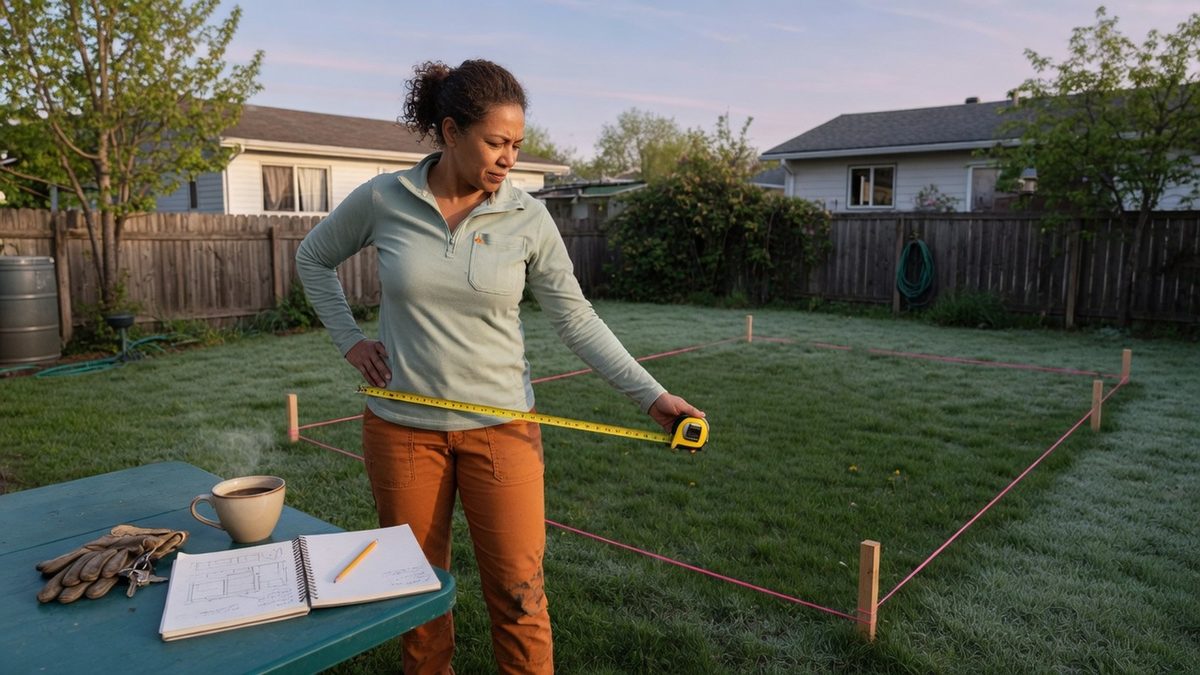
What am I actually putting in here? Write the list. Measure the biggest item. Add 30% for the things you forgot. Then size up one footprint above what that math suggests. Buyers who skip this step are the buyers writing the size-regret reviews.
Is the siding plywood T1-11, OSB T1-11, or LP SmartSide? If the salesperson can't or won't answer, walk to a different dealer. This is the single biggest factor in how the next decade goes.
Is the framing 16-inch or 24-inch on-center? 16-inch is the standard for quality builders. 24-inch is the budget production approach. Both are legitimate; the difference is build quality and rigidity, not safety.
What foundation will I actually build? Be honest. If the answer is "I'll figure it out later," you're not ready to buy yet — you're ready to read a foundation guide.
What's the warranty actually cover, in writing? Read the document, not the marketing. Pay particular attention to the painting requirement, the timeframe to first paint after delivery, the "natural characteristics" exclusion, the re-leveling exclusion, and whether the warranty transfers if you sell the house. These are the clauses behind almost every denied claim.
Has my HOA said yes in writing? Verbal approval is worthless. Get it in writing before delivery.
What's the real fifteen-year cost of ownership? Add: purchase price + delivery + foundation + permit + paint upgrade + anchors + the realistic chance of two to three repaint cycles + minor repairs. Compare that number to alternatives, not the sticker price.
Am I going to run electrical? If there's even a 30% chance the answer is yes, run the conduit at build time. Retrofitting is two to four times the cost.
Single door or double door? If you'll ever roll a mower or wheelbarrow through it, double door. Always.
Loft or no loft? If you have a gable roof and storage needs, loft. Almost always worth the $200 to $600.
The bottom line
The 2x4-framed, T1-11-sided wood shed is the default American backyard building for a reason. It's familiar, customizable, repairable, and at the right price point it does honest work for fifteen to twenty-five years. It is also a wood building with a wood building's needs, and the marketing around it consistently understates the maintenance commitment, the hidden costs, and the OSB-vs-plywood substrate trap that determines whether yours becomes the great success story or the cautionary tale.
The ShedScout view: if you're a hands-on owner with a $4,000-to-$8,000 budget, a real workspace use case, and the willingness to either paint it on schedule or pay someone to, this category is genuinely excellent — and within it, the Amish builders and the LP SmartSide upgrades are systematically better value than what's on display at most big-box stores. If you don't want to maintain wood, look elsewhere. If you only need to keep tools dry, look elsewhere. If you're tempted by the cheapest possible kit, stretch your budget far enough to escape OSB substrate or buy a quality plastic shed instead.
The biggest gift this article can give you is the substrate question. If the only thing you do differently after reading is ask "is that plywood or OSB?" before you sign, and walk away from anything OSB, you've already saved yourself from the most common version of this category's failure story. Everything else is detail.
Last reviewed: April 2026. ShedScout writes shed-type guides to help you understand your options, not to push you toward any single brand. We may earn a commission if you buy through our comparison tools, but our shed-type recommendations are independent of any affiliate relationship.
Next step: Take the ShedScout shed-type quiz to see which of the five shed categories actually fits your situation, or read the other shed-type guides — Cedar, Log & Timber, Metal/Steel, and Plastic/Resin — to compare honestly before you decide.